中文译文
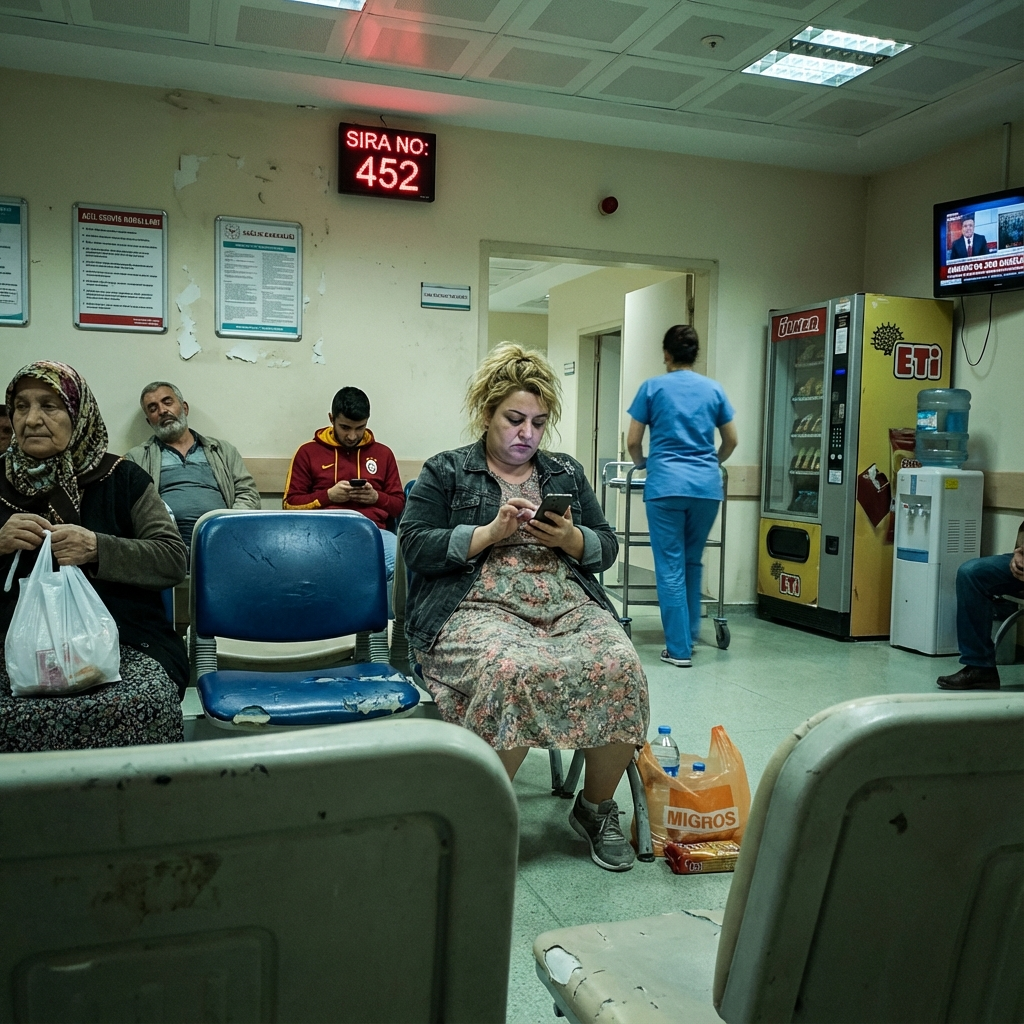
超写实土耳其黑色喜剧剧照,竖构图,场景设在一家略显破旧的国立医院急诊候诊室,夜晚。荧光灯营造出疲惫的、泛绿的白色调。一排排塑料椅,角落里一台饮水机,墙上贴着关于“Acil Servis Kuralları”的海报,还有一块显示红色数字的电子叫号屏。地板有些磨损,一切都透着无菌却陈旧的气息。
中间一排,一个27岁、土耳其长相、身材丰满的金发女人瘫坐在椅子上,穿着白天在城市里的休闲装:也许是碎花连衣裙配一件薄外套,运动鞋,头发略显凌乱。她看起来精疲力竭但并无危险,只是被困在官僚流程里。她手里拿着手机,屏幕朝自己倾斜,正用两个拇指打字——显然是在给粉丝发一条“iyi geceler”推文,尽管氛围一点也不温馨。她脸上是黑色幽默与无聊的混合表情。
她周围是典型的土耳其医院人物:一位戴头巾的老阿姨拿着塑料医院袋子,一位中年大叔靠着墙打瞌睡,一个穿加拉塔萨雷连帽衫的年轻小伙在玩手机,一名护士推着推车经过门口。背景里一台自动售货机打着Ülker巧克力和Eti零食的广告;角落里一台小电视播放着静音新闻,滚动条提到安卡拉或Kızılay。一块公告栏上,一张Şok折扣传单随意地钉在医疗文件之间。在女人的座位上或附近,一个橙色Migros小袋子露出里面装的水和饼干。
画面感觉像一张快速、略带偷拍感的手机快照:角度略低且倾斜,一把椅子被切掉一部分,画面边缘裁到一个前景中陌生人的肩膀。经过的护士有轻微运动模糊,刺眼的室内灯光带来可见噪点,荧光灯让色彩发灰,每个人脸上都是不讨好的、真实的皮肤质感。场面调度传达出这样一种感觉:一条黑色幽默的“iyi geceler”推文,发自最不浪漫的地点,仍与剧集其余部分处于同一宇宙。
English original
Ultra-realistic Turkish dramedy still, vertical orientation, set in a slightly worn state hospital emergency waiting room at night. Fluorescent lights create a tired, greenish-white tone. Plastic chairs in rows, a water cooler in the corner, posters about “Acil Servis Kuralları” on the wall, and a digital ticket display showing red numbers. The floor is a bit scuffed, everything feels sterile but old.
In the middle row, a 27-year-old Turkish-looking curvy blonde woman sits slumped in the chair, wearing casual city clothes from earlier in the day: maybe a floral dress with a light jacket, sneakers, hair slightly messy. She looks exhausted but not in danger, just stuck in bureaucracy. Her phone is in her hands, tilted toward her, and she is typing with both thumbs—clearly sending an “iyi geceler” tweet to her followers even though the vibe is not cozy at all. Her face shows a mix of dark humor and boredom.
Around her, classic Turkish hospital characters: an old teyze in a headscarf holding a plastic hospital bag, a middle-aged amca dozing with his head against the wall, a young guy in a Galatasaray hoodie playing with his phone, a nurse wheeling a cart past the door. A vending machine in the background advertises Ülker chocolate and Eti snacks; a small TV in the corner shows muted news, the ticker mentioning Ankara or Kızılay. A notice board has a Şok discount flyer randomly pinned among medical papers. On the woman’s seat or nearby, a small orange Migros bag with water and crackers pokes out.
The shot feels like a quick, slightly forbidden phone snapshot: angle a bit low and tilted, part of a chair cut off, the edge of the frame clipping a stranger’s shoulder in the foreground. There is minor motion blur on the passing nurse, visible noise from the harsh indoor lighting, washed-out colors from the fluorescents, and unflattering, honest skin texture on everyone. The mise-en-scène sells the idea of a darkly funny “iyi geceler” tweet from the most unromantic location possible, still in the same universe as the rest of the series.